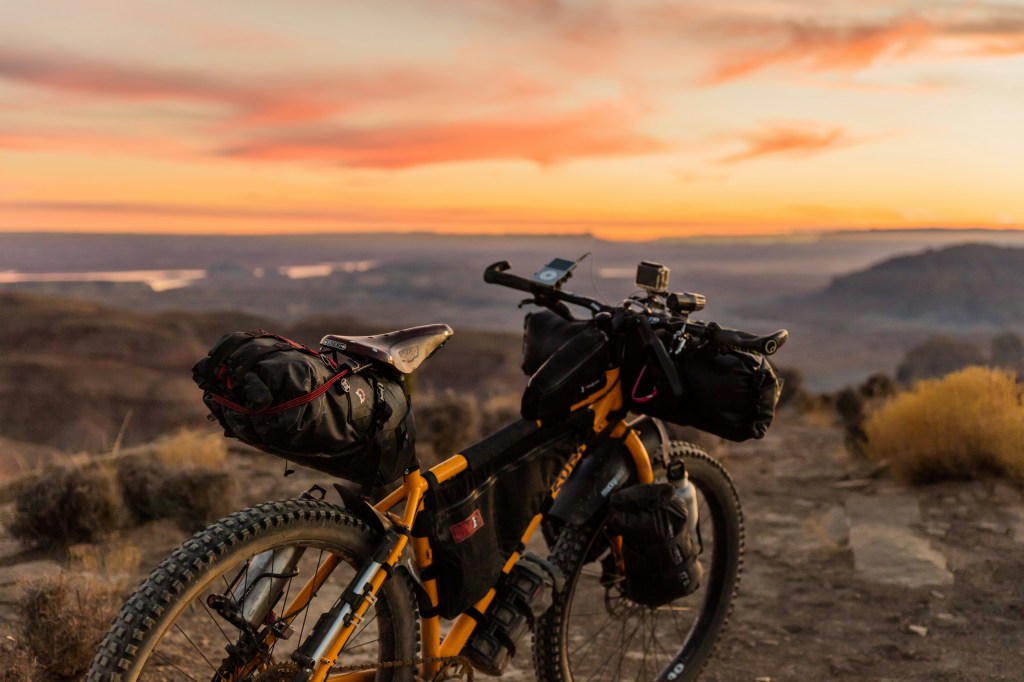
What is Bikepacking?
Bikepacking is long-distance cycling that combines the adventure of backpacking with the thrill of mountain biking. You can travel light by carrying minimum gear on your bike and cover longer distance compared to traditional biking.
There are plenty of types of trails, from remote routes in the wilderness to traveling between cities, so everyone can find a trail for their taste.
This post explains what bikepacking is and shares tips on how to do bikepacking sustainably.
Bikepacking for Responsible Travelers
For those who are passionate about sustainable travel, bikepacking is also an excellent choice.
- It reduces your carbon footprint significantly compared to car or plane travel.
- Bikepackers can explore natural landscapes without contributing to pollution and environmental degradation.
- Additionally, the slower pace of bikepacking allows you to travel longer and connect with nature better.
Planning Your Bikepacking Trip
Choose a Route
Selecting the right route is crucial for a successful bikepacking trip. Here are some tips to help you choose:
- Assess Your Skill Level: If you are a beginner, opt for well-marked trails.
- Consider the Terrain: Flat routes are easier and faster, but rugged terrain offers more challenges for experienced bikers.
- Check the Weather: Check the forecast and choose clothes accordingly.
- Plan for Permits: Some trails require permits or have restricted access. Make sure to check it in advance.
Prepare Your Gear
The right gear is essential for a comfortable and safe bikepacking experience. Here’s a basic list of what you’ll need:
- Bicycle: Choose a bike suited for the terrain you’ll be covering.
- Bike Bags: Invest in durable, waterproof bike bags to carry your gear. There is a growing number of sustainable bags from recycled materials for responsible travelers.
- Tent: A lightweight tent or hammock provide a place to sleep.
- Sleeping Gear: A compact sleeping bag and sleeping pad are essential.
- Cooking Equipment: If you want to cook on your trip, make sure to take some cooking utensils.
- Clothing: Pack clothes that dry fast and choose several layers instead of one warmer jacket.
- Navigation Tools: Maps, GPS device, or a smartphone with offline maps.
- Repair Kit: Basic tools and spare parts to fix common mechanical issues.
Best Tools for Bikepacking
Equipping yourself with the best tools can make a big difference on the road:
- Multi-Tool: It includes Allen wrenches, screwdrivers, and a chain tool and can help you out in most cases.
- Tire Repair Kit: Includes tire levers, patches, and a pump or CO2 inflator.
- Navigation Device: A GPS device or offline maps to keep you on track.
- Portable Charger: A solar charger or power bank to keep your devices charged.
- Water Filtration System: A compact water filter or purification tablets to ensure you have safe drinking water.
Safety Tips for Bikepacking
Staying safe is paramount when bikepacking:
- Wear a Helmet: Always wear a properly fitted helmet to protect against head injuries. Carry a basic first aid kit and know how to use it.
- Stay Visible: Use front and rear lights, reflective gear, and bright clothing to stay visible to others.
- Stay Informed: Check weather forecasts and trail conditions before you set out.
Sustainable Practices for Bikepacking
Adopting sustainable practices ensures your bikepacking adventure doesn’t harm the environment:
- Leave No Trace: Pack out all trash and minimize campfire impacts if you cook.
- Use Reusable Items: Choose reusable containers, utensils, and water bottles.
- Support Local: Buy from local businesses and respect local cultures.
- Conserve Water: Use biodegradable soap and avoid contaminating water.
Bikepacking can be a great way to connect with nature, challenge yourself, and travel in a sustainable way.

 My Green Trips
Leave a comment